
The Gear That Keeps You Safe
Imagine this: You’re halfway up a trad route, hands sweating, feet smearing, and you need a solid piece of gear to protect your next move. This is where your spring-loaded camming device (SLCD) becomes your best friend.
Cams are a staple of modern trad climbing, offering versatile, secure protection in everything from splitter cracks to flared placements. But have you ever wondered how these life-saving devices actually work?
In this guide, we’ll break down the science behind SLCDs, explain why they’re so effective in different rock types, and explore why Totem Cams stand out from the crowd.
What is a Spring-Loaded Camming Device (SLCD)?
 A spring-loaded camming device (SLCD) is a piece of active protection gear used in traditional climbing. Unlike passive gear (like nuts and hexes), SLCDs expand inside a crack to create outward force, keeping them securely in place.
Key Components of an SLCD:
- Lobes: The curved metal pieces that expand and grip the rock.
- Axle(s): The rotating bar(s) that hold the lobes together and allow them to move.
- Stem: The flexible or rigid shaft connecting the lobes to the trigger mechanism.
- Trigger: The mechanism climbers pull to retract the lobes for placement.
- Cabling & Sling: The connection point for attaching a carabiner and clipping the rope.
How It Works:
- Retract the trigger to pull in the lobes.
- Insert the cam into a crack or pocket.
- Release the trigger—the spring-loaded lobes expand and press against the rock.
- When loaded (i.e., if you fall), the lobes grip the rock and hold your weight.
SLCDs work because of friction and mechanical force—the outward expansion of the lobes creates a secure hold in a properly placed cam.
The Physics Behind SLCDs: Why They Hold
The magic behind a cam’s ability to stay in place comes down to a simple yet brilliant concept: logarithmic spiral geometry.
Understanding Cam Angles & Friction
- The lobes of a cam are shaped as logarithmic spirals, which means their contact angle remains constant as they expand.
- This ensures that the force exerted by the lobes stays proportional to the force pulling on the cam (i.e., your weight in a fall).
- A typical camming angle (usually 13-15 degrees) strikes a balance between holding power and range—too small, and the cam won’t fit well; too large, and it may slip.
Why This Matters:
- The better the friction between the lobes and the rock, the more secure the placement.
- Different cam designs use slightly varied camming angles to optimize grip, range, and ease of placement.
Totem Cams use a unique Direct Loading System, which distributes force directly onto the lobes rather than relying on axles. This improves grip, especially in marginal placements.
Common Spring-Loaded Camming Device Types & Their Uses
Not all cams are created equal—here’s a breakdown of the most common designs:
Single Axle Cams (e.g., Wild Country Friends, DMM Dragons)
- Pros: Lighter weight, simpler design.
- Cons: Smaller range per cam size compared to double axle cams.
Double Axle Cams (e.g., Black Diamond Camalots, Metolius Mastercams)
- Pros: Wider range per cam size, added security.
- Cons: Heavier, bulkier design.
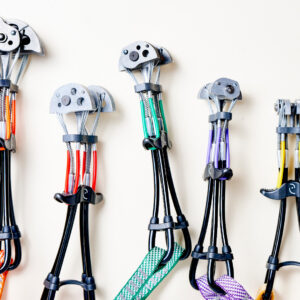 Direct Loading System Cams (e.g., Totem Cams)
- Pros: Better grip in marginal placements, improved flexibility, unique two-lobe loading for aid climbing.
- Cons: Slightly more expensive, but worth it for the added security.
Takeaway:
- If you value weight savings, go for single axle cams.
- If you want a versatile cam with a wider range, double axle cams are a solid choice.
- If you need a cam that performs in difficult placements (flared cracks, pin scars, or slippery rock), Totem Cams are the best option.
Why Totem Cams Are Different (And Better in Many Cases)
What Sets Totem Cams Apart?
Unlike traditional Spring-Loaded Camming Devices, Totem Cams feature a Direct Loading System (DLS), which means:
- Each lobe independently engages the rock rather than relying on the axle.
- Superior holding power in marginal placements.
- Works in pin scars, horizontal cracks, and flared placements where other cams struggle.
- Can function with only two lobes engaged (ideal for aid climbing).
How Totems Improve Safety & Performance
- More surface contact with the rock = better grip, even in slick or irregular placements.
- Flexible stem reduces cam walking, keeping it secure in the crack.
- Lower failure rates in real-world testing, making them a favorite for climbers who want the safest gear possible.
If you climb a lot of granite (Yosemite, Squamish) or desert sandstone (Indian Creek, Red Rock), Totem Cams should be part of your rack.
How to Place a Cam for Maximum Holding Power
No matter how well a cam is designed, a bad placement won’t hold a fall. Here’s how to get it right:
- Find the right size: The lobes should be about 50-70% retracted when placed.
- Look for solid rock: Avoid soft or crumbly rock that could break under load.
- Align with the expected fall direction: The stem should point in the direction the rope will pull in a fall.
- Check for lobes evenly engaged: Uneven placements are weaker and more likely to slip.
- Avoid over-camming or under-camming: Too tight or too loose = weak placements.
Bonus Tip: When using Totem Cams in funky placements, take advantage of their two-lobe engagement capability for extra security.
Final Thoughts: Why Every Trad Climber Needs SLCDs
Whether you’re just starting your trad climbing journey or you’re an experienced crack climber, having the right spring-loaded camming device in your rack can make all the difference.
Why Totem Cams Are a Must-Have:
✅ Superior holding power in marginal placements
✅ Direct Loading System = more grip in tricky cracks
✅ Flexible stem reduces walking
✅ Ideal for trad, big wall, and aid climbing
Ready to upgrade your climbing protection gear? Check out our selection of Totem Cams and build the safest rack for your next adventure.